Skip to navigation | Skip to main content | Skip to footer
The University of Manchester home
Manchester Institute of Biotechnology
  • Manchester Institute of Biotechnology
  • Research
    • Fundamental bioscience and technology innovation
    • Sustainable bio-based chemicals and materials
    • Biological solutions for environmental protection
    • Biotechnologies for advanced therapeutics
    • Facilities
    • Centres
    • Impact
  • Home
  • Collaborate

    For businesses

    For academics

  • Research

    Research themes

    • Fundamental bioscience and technology innovation
    • Sustainable bio-based chemicals and materials
    • Biological solutions for environmental protection
    • Biotechnologies for advanced therapeutics

    Research centres

    Research facilities

    People

    Research impact

    Research fellowships

  • Join us

    Jobs and fellowships

    Events

    Study with us

    • Doctoral training
    • Research projects
    • Industrial Biotechnology MOOC
  • About

    People

    News

    Contact us

  • Manchester Institute of Biotechnology
  • Research
  • Fundamental bioscience and technology innovation
  • Manchester Institute of Biotechnology
  • Research
    • Fundamental bioscience and technology innovation
    • Sustainable bio-based chemicals and materials
    • Biological solutions for environmental protection
    • Biotechnologies for advanced therapeutics
    • Facilities
    • Centres
    • Impact
Research
""

Fundamental bioscience and technology innovation

By uncovering how biological systems function at the molecular and cellular scale, we generate the knowledge and technologies that enable transformative solutions across health, sustainability and industrial productivity.

Decoding biology for real-world applications

Our work in fundamental bioscience and technology innovation lays the scientific foundations for tomorrow’s breakthroughs.

By advancing fundamental bioscience and technology innovation, we generate the knowledge and tools that power transformative solutions across health, sustainability and industry. Our work spans pioneering new enzyme classes, catalytic mechanisms and high‑throughput engineering pipelines, alongside structural biology, NMR, crystallography, mass spectrometry and computational modelling – enabling programmable protein catalysis and predictive biological engineering.

Our fundamental bioscience and technology innovation research

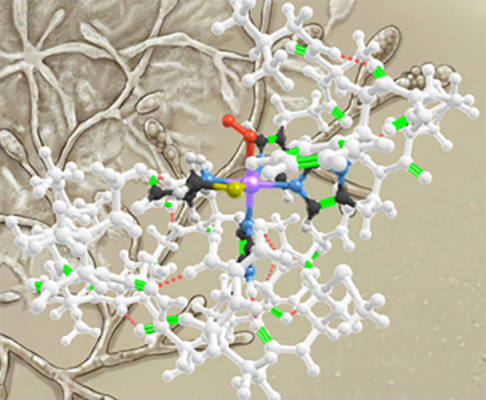
A 3D render of a protein structure.

Enzymes and functional protein discovery

Our researchers identify, characterise and understand diverse natural and engineered proteins, revealing their mechanisms and catalytic potential.

By integrating structural biology, mechanistic enzymology, metagenomics and high‑throughput screening, we uncover novel enzyme classes and expand the biochemical reactions accessible to biotechnology. These discoveries feed directly into industrial partnerships and translational pipelines, enabling new processes for chemicals, materials, antimicrobials and therapeutics.

Developing predictive, AI‑enabled tools for enzyme design and biocatalysis

We use advanced computational design, AI‑driven modelling and laboratory evolution to create biocatalysts with improved stability, selectivity and activity. Through partnerships such as the International Centre for Enzyme Design, we integrate structural prediction, machine‑learning‑guided mutagenesis and rapid experimental validation into streamlined discovery pipelines.

By combining machine learning, structural prediction, quantum chemistry and molecular dynamics, we can accurately forecast enzyme behaviour and design catalysts in silico, reducing the need for extensive laboratory screening. With new GPU infrastructure, MIB is embedding AI across engineering biology to accelerate discovery and improve translatability in sustainable manufacturing and therapeutic development.

A 3D render of a protein structure.

High‑throughput analysis of protein structure and function

We use automated, robotics‑driven platforms to test thousands of proteins quickly, helping us uncover how they work and which ones have the greatest potential.

Once promising proteins are identified, we use powerful structural techniques – such as ion mobility, mass spectrometry, NMR, crystallography, and other biophysical tools – to reveal how their shape and dynamics influence their function. By combining rapid screening with detailed structural insight, we can move discoveries into real‑world applications faster and more efficiently

Synthetic genomics and genome refactoring

Our researchers construct synthetic chromosomes, engineer genome‑wide modifications and develop biocontainment systems that allow precise control of engineered organisms. Through major initiatives in synthetic yeast, minimal genomes and non‑coding gene function, we use automated design‑build‑test pipelines to refactor genomes for improved traits such as stability, productivity and biosafety.

These synthetic genomics capabilities provide powerful platforms for developing new microbial chassis, accelerating biomanufacturing, and exploring fundamental questions about the rules of life.

Understanding microbial communities

Our researchers analyse natural and engineered microbiomes, investigate microbial interactions and use computational tools to understand community dynamics. We engineer co‑cultures, microbial consortia and microbiomes using mobile genetic elements, synthetic biology and environmental genomics.

Applications span CO₂ bioconversion, waste valorisation, environmental remediation, and the development of stable production strains. This systems‑level approach allows us to design microbial communities that perform reliably in real‑world environments, supporting net‑zero innovation and next‑generation biomanufacturing.

Why does fundamental bioscience research matter?

Our fundamental bioscience research provides the essential foundations for progress across the biotechnology landscape – delivering rich experimental insights, advanced analytical tools and the innovations that enable new enzymes, materials, diagnostics and other transformative technologies.

This discovery‑led work strengthens the UK’s capability in engineering biology, fuels the pipeline of future applications and supports the collaborative, cross‑sector advances needed to maintain scientific, industrial and national competitiveness.

""

News

Show previous news story Show next news story

Manchester–Tokyo team uncovers rare nickel enzyme with potential to transform sustainable drug manufacturing

Researchers from the Manchester Institute of Biotechnology (MIB) have helped reveal, for the first time, the detailed molecular mechanism by which nature constructs a rare and pharmaceutically important chemical group, the sulfonamide.

Unlocking life’s secrets: Manchester scientists join team decoding the genome’s hidden grammar

The BBSRC has awarded more than £20 million through its Strategic Longer and Larger (sLoLa) grants scheme to support four ambitious projects in microbiology, photosynthesis, gene regulation, and quantum biology.Professor Patrick Cai and Dr Joshua James join a project led by Professor Ferenc Mueller from the University of Birmingham that aims to uncover the hidden grammar of the genome – the underlying logic that governs how genes are switched on and off during development. The team combines cutting-edge computational and experimental approaches to decode these patterns, paving the way for breakthroughs in understanding and engineering biology.The project is a collaboration between partners at the University of Birmingham, EMBL-European Bioinformatics Institute, Imperial College London, The Francis Crick Institute, and the University of Edinburgh.The sLoLa scheme is designed to support curiosity-driven research that furthers our understanding of how life works which could one day lead to innovation across sectors.Professor Anne Ferguson-Smith, BBSRC Executive Chair, said:“Long-term investments through our sLoLa scheme brings researchers with different expertise together to collaboratively pursue questions whose answers may reshape our understanding of the living world.”

New project to pioneer the principles of human genome synthesis

An ambitious new research project, SynHG (Synthetic Human Genome), is aiming to develop the foundational and scalable tools, technology and methods needed to synthesise human genomes. Through programmable synthesis of genetic material we will unlock a deeper understanding of life, leading to profound impacts on biotechnology, potentially accelerating the development of safe, targeted, cell-based therapies, and opening entire new fields of research in human health. Achieving reliable genome design and synthesis – i.e. engineering cells to have specific functions – will be a major milestone in modern biology

Future-proofing agriculture: scientists look to biotechnology to improve crop resilience and nutritional value

Funded by a £8.5M grant from the UK Government’s Advanced Research and Invention Agency (ARIA), the researchers will leverage advances in engineering biology to establish synthetic plant chromosome (synPAC) technologies. These technologies promise to provide powerful new ways of introducing novel traits to plants —such as producing essential nutrients or increased pest resistance—while maintaining the plant’s existing characteristics.Learning from nature: improving crops for people and the planetModern agriculture faces significant challenges, from climate change to soil degradation and food security concerns. However, traditional plant breeding and selection can take decades to introduce beneficial traits, relying on random genetic mixing over multiple generations.This project will develop synPACs, a novel system for rapidly designing and delivering beneficial traits to plants. Building on natural processes, synPACs enable researchers to rapidly introduce multi-gene traits in a far more precise, controllable, and predictable fashion — offering an innovative alternative to conventional breeding methods.To achieve this, scientists at The University of Manchester will develop unique new technologies that will allow crop scientists to design and build chromosomes carrying desired traits. synPACs will use Saccharomyces cerevisiae (common baker’s yeast) as a DNA assembly line to efficiently assemble large segments of plant DNA into synthetic chromosomes, prior to direct transfer to crop plants using highly efficient methods developed at the John Innes Centre, and characterised at the Earlham Institute.The Earlham Institute will lead on three areas of the project; potato tissue atlas and regulatory element discovery, assembly and testing of a potato regulatory element library through the Earlham Biofoundry, and engineering synPAC components and synPAC maintenance.The first phase of the project will focus on potatoes, a globally important crop, with the goal of developing technology pipelines to fast-track plant engineering. Initial target traits will include enhanced nutritional content and resilience against environmental stressors, as well as improving agricultural sustainability by reducing reliance on chemical inputs while improving crop yields. By enabling plants to efficiently produce valuable compounds, synPACs could also support the development of new, plant-based sources of essential nutrients and bioactive compounds, benefiting both human health and the environment.Ensuring stability, safety and ethicsThe synPAC initiative is committed to working transparently with industry partners, regulators, and the public to ensure responsible development and application of this technology. The research team is focused on delivering benefits for both farmers and consumers, ensuring that crops developed through this platform align with the highest standards of safety, sustainability, and societal acceptance. The synPAC team will work closely with social science teams also funded by ARIA to explore these critical issues.With a clear roadmap for Phase Two, the synPAC team aims to expand this technology to other staple crops, ultimately ushering in a new age of crops optimised for climate resilience, nutrition, and sustainability.

New research to reveal hidden microbial impact on CO2 storage

A new research project led by scientists at The University of Manchester in collaboration with global energy company Equinor ASA will unlock crucial insights into how microbes in deep underground storage sites could impact the success of carbon capture and storage (CCS).

Explore our other research themes

Sustainable bio-based chemicals and materials
Discover our chemicals and materials research

""

Biological solutions for environmental protection
Discover our environmental research

""

Biotechnologies for advanced therapeutics
Discover our therapeutics research

""

Get in touch

Reach out to our researchers for more information about their work, or if you have a general enquiry, please contact our team.

Contact us

Contact us

  • Contact details

Find us

Manchester Institute of Biotechnology
The University of Manchester
131 Princess Street
Manchester
M1 7DN
United Kingdom

Connect with us

  • Bluesky page for Manchester Institute of Biotechnology
  • LinkedIn page for Manchester Institute of Biotechnology

  • Disclaimer
  • Data Protection
  • Copyright notice
  • Accessibility
  • Freedom of information
  • Charitable status
  • Royal Charter Number: RC000797